Neuroscience and AI Interface
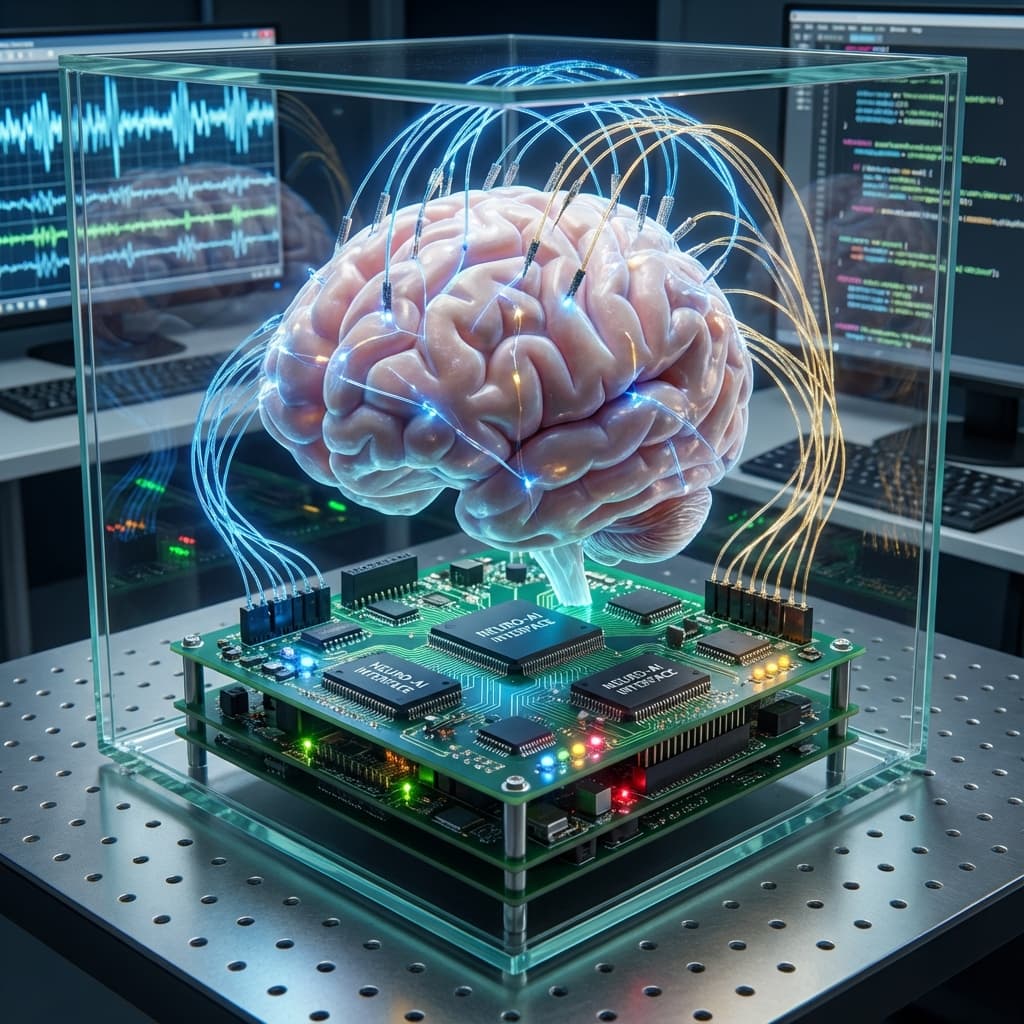
The boundary between biology and silicon is dissolving. In 2025, Brain-Computer Interfaces (BCIs) have moved out of the lab and into the lives of patients, restoring lost senses and offering a glimpse into a transhumanist future. We are entering the age of the Cyborg.
Restoring Connection
This year, the first cohort of patients received the "NeuralLink V2" implant. The results are nothing short of miraculous. Individuals with quadriplegia are now controlling computers, playing complex video games, and even operating robotic limbs with thought alone. The latency has dropped to near-natural levels, allowing for fluid, intuitive movement that feels like a natural extension of the body.
Beyond motor control, we are seeing early success in restoring vision. By bypassing damaged eyes and stimulating the visual cortex directly, crude but functional sight has been restored to the congenitally blind.
Organoid Intelligence
While we merge chips with brains, we are also merging brains with chips. "Organoid Intelligence" (OI) has made significant strides. Labs are now using lab-grown clusters of human neurons to perform complex computations. These "biocomputers" are showing potential to outperform silicon in pattern recognition tasks while consuming a fraction of the energy. It raises the fascinating possibility that the future of AI hardware might be biological.
The Privacy of Thought
As these technologies advance, we face the ultimate privacy frontier: our own minds. The "Neurorights Acts" passed in the EU and South America this year are the first legal frameworks designed to protect mental privacy. They establish that neural data is the property of the individual and cannot be accessed or monetized without explicit, revocable consent. As we open the door to our minds, we must ensure we hold the only key.