James Webb Telescope: New Discoveries
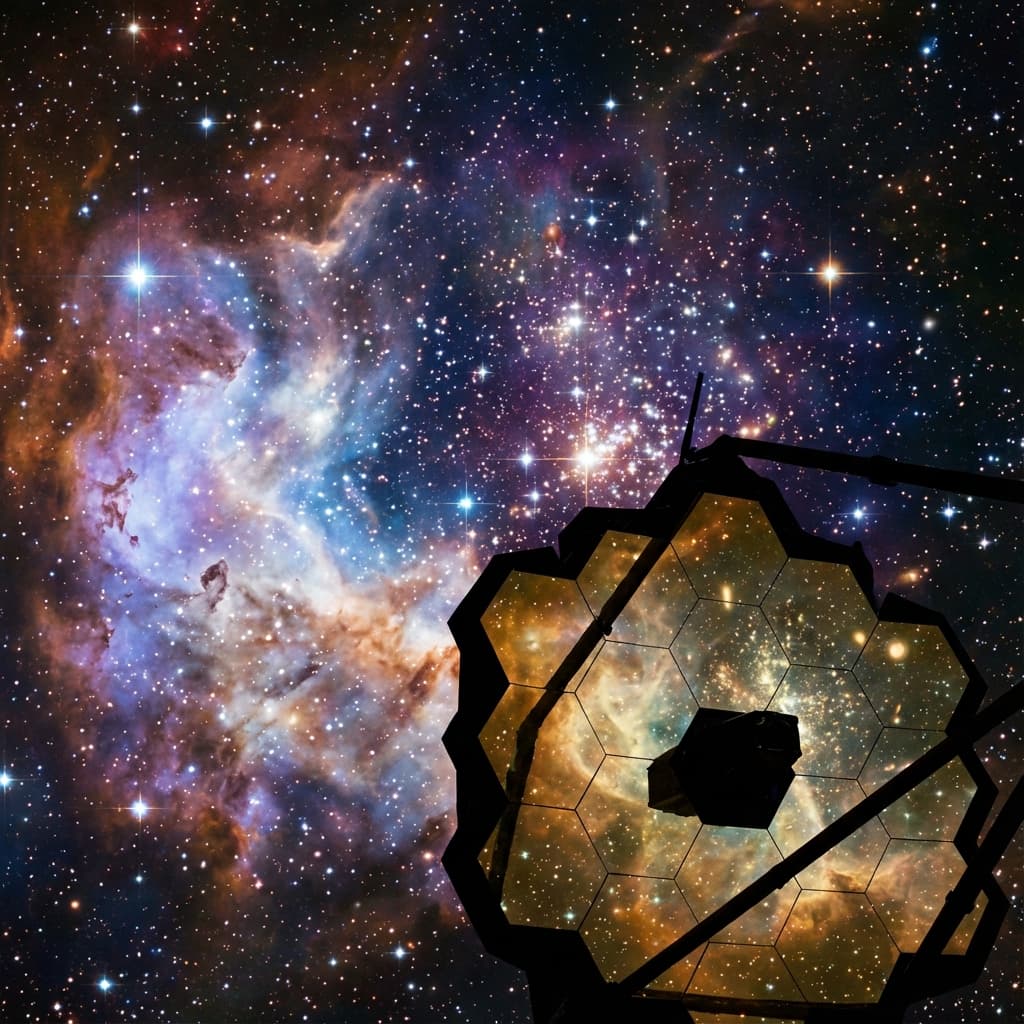
Three years into its mission, the James Webb Space Telescope (JWST) continues to rewrite the textbooks. The latest data releases have challenged our fundamental understanding of cosmology and the potential for life elsewhere in the universe. We are seeing the universe not as it is, but as it was at the dawn of time.
The "Impossible" Galaxies
JWST has confirmed the existence of massive, fully formed galaxies just 300 million years after the Big Bang. According to the Standard Model of Cosmology, these shouldn't exist—there simply wasn't enough time for gravity to pull that much matter together. This "Crisis in Cosmology" is forcing astrophysicists to consider radical new theories, including the possibility of "Early Dark Energy" or modifications to our understanding of gravity itself. We may be on the verge of a new physics.
Biosignatures on K2-18b
The search for extraterrestrial life has narrowed. JWST's spectrometer has detected definitive evidence of Dimethyl Sulfide (DMS) in the atmosphere of K2-18b, a "Hycean" world covered in oceans. On Earth, DMS is only produced by life (specifically, marine phytoplankton). While not absolute proof, it is the strongest biosignature we have ever detected outside our solar system, sparking a race to confirm these findings with next-generation observatories.
If confirmed, this would be the most profound discovery in human history: we are not alone.
The First Stars
We are finally seeing the "Cosmic Dawn." JWST has captured the faint light of Population III stars—the very first stars to ignite in the universe. Composed entirely of hydrogen and helium, these giants forged the heavier elements that make up our bodies today. Seeing them is like looking at our own cosmic baby pictures. They are the ancestors of every atom in our bodies.